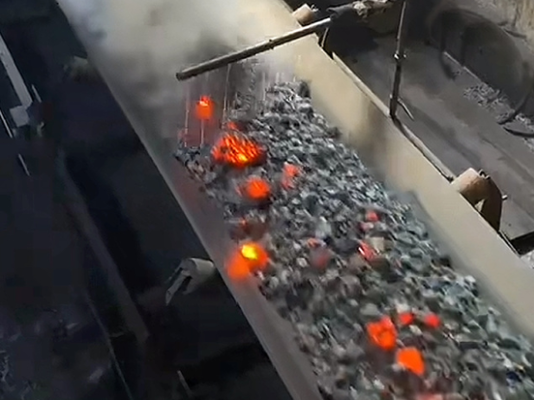
ST2000 Heat Resistant Conveyor Belt 7mm Thickness For Metallurgy Industry
Heat-resistant conveyor belt ST2000 Special Conveyor Belts
Product Concept
The heat-resistant conveyor belt is manufactured using multi-layer rubber cotton canvas (polyester cotton cloth) or polyester canvas covered with high-temperature or heat-resistant rubber, bonded together through high-temperature vulcanization. This construction makes it suitable for conveying hot materials including coke, cement, slag, and hot castings at temperatures below 175°C.
Temperature Classification:
Type I (T1): Withstands test temperatures ≤100°C, maximum short-term operating temperature 150°C
Type II (T2): Withstands test temperatures ≤125°C, maximum short-term operating temperature 170°C
Type III (T3): Withstands test temperatures ≤150°C, maximum short-term operating temperature 200°C
Type IV (T4): Withstands test temperatures ≤175°C, maximum short-term operating temperature 250°C
Applications & Usage
Primarily utilized in metallurgy, construction, and related industries for transporting high-temperature materials including sinter, coke, and cement clinker. The belt accommodates material temperatures up to 800°C while maintaining belt surface temperatures below 220°C.
Key Features:
Utilizes EPDM rubber as the covering layer
Employs domestic special high-temperature resistant canvas as skeleton material
Unique formula design addresses critical challenges including high ethylene propylene rubber saturation, poor adhesion, and low interlayer bonding
Lightweight belt construction
Extended service life (approximately 2-4 times longer than conventional belts)
ST2000 Heat Resistant Conveyor Belt 7mm Thickness For Metallurgy Industry
Heat-resistant conveyor belt ST2000 Special Conveyor Belts
Product Concept
The heat-resistant conveyor belt is manufactured using multi-layer rubber cotton canvas (polyester cotton cloth) or polyester canvas covered with high-temperature or heat-resistant rubber, bonded together through high-temperature vulcanization. This construction makes it suitable for conveying hot materials including coke, cement, slag, and hot castings at temperatures below 175°C.
Temperature Classification:
Type I (T1): Withstands test temperatures ≤100°C, maximum short-term operating temperature 150°C
Type II (T2): Withstands test temperatures ≤125°C, maximum short-term operating temperature 170°C
Type III (T3): Withstands test temperatures ≤150°C, maximum short-term operating temperature 200°C
Type IV (T4): Withstands test temperatures ≤175°C, maximum short-term operating temperature 250°C
Applications & Usage
Primarily utilized in metallurgy, construction, and related industries for transporting high-temperature materials including sinter, coke, and cement clinker. The belt accommodates material temperatures up to 800°C while maintaining belt surface temperatures below 220°C.
Key Features:
Utilizes EPDM rubber as the covering layer
Employs domestic special high-temperature resistant canvas as skeleton material
Unique formula design addresses critical challenges including high ethylene propylene rubber saturation, poor adhesion, and low interlayer bonding
Lightweight belt construction
Extended service life (approximately 2-4 times longer than conventional belts)